
How Shame and Guilt Affect Mental Health
🎧 Listen to:
How Shame and Guilt Affect Mental Health
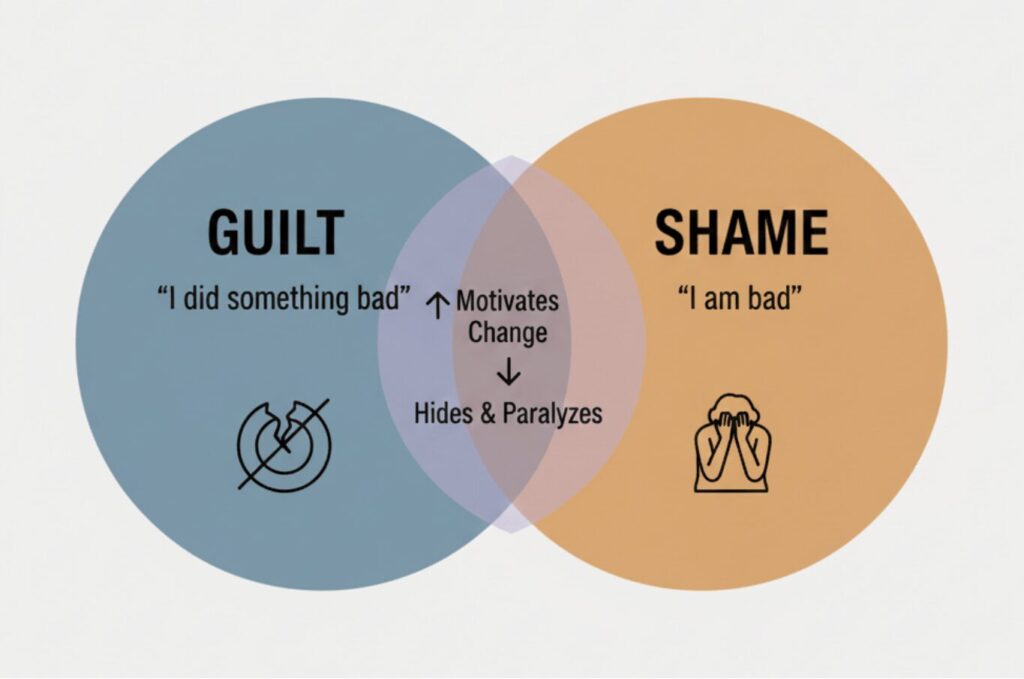
Shame and guilt are major barriers to mental health recovery. While guilt is constructive ("I did something wrong"), shame is destructive ("I am bad"). Inspire Recovery Center helps dismantle toxic shame through connection and self-compassion, transforming self-criticism into motivation for healing.
If you have a mental health problem, you know that the actual problem—like anxiety, depression, or intrusive thoughts—is only half the battle. The other half is the constant, tiring buzz in your thoughts that tells you you’re weak, broken, or inherently flawed.
That sound is guilt and shame.
People often use these two strong feelings interchangeably, but they are really different, and knowing the difference is the most critical step in healing. They are the two things that keep you from reaching out, talking about your sorrow, or feeling you deserve to get better.
We treat mental health at Inspire Recovery Center by first carefully breaking down these obstacles that people put up for themselves. To get better mentally, you need to change how you see yourself first.
1. The Key Difference: “I Did” vs. “I Am”
Guilt and shame both feel bad, but they assault different pieces of who you are:
- Guilt is about what you did: “I did something wrong.” Guilt is about a certain choice, action, or mistake. It is helpful because it makes you want to say you’re sorry, put things right, or change how you act. It states, “That was the wrong thing to do.”
- Shame is about yourself: “I am bad.” Shame is bad. You want to conceal because you feel worthless deep down. Because I failed, I am a failure. Shame is bad for you since it makes you think about who you are and makes you feel like you’re always wrong.
When you’re having mental health problems, guilt is manageable—you can fix a mistake. But guilt stops you in your tracks, making you think that your problems are proof that you are essentially damaged.
2. The Bad Cycle of Mental Health
Shame and shame don’t simply feel horrible; they also make your mental health worse, which makes the agony worse and worse:
- Triggers of Shame: Shame needs to be kept a secret. You stay away from people because you think that if they saw the “real” you (the worried, depressed, or suffering person), they would not want to be with you. Being alone makes sadness and anxiety worse by making the symptoms worse.
- Guilt Can Make You Hurt Yourself: Feeling bad about not being productive, cheerful, or “normal” can make you hurt yourself. This could mean not taking your meds, not going to therapy sessions, or doing things that hurt you to quiet the voice in your head.
- The Perfectionism Trap: Perfectionism is a major cause of many mental health problems. If you don’t meet an unachievable standard (which you always will), shame tells you that you are a failure, which makes you feel like you need to try even harder or just quit up.
3. Getting Free: Breaking Down the Shame
You can’t make yourself feel better by shaming yourself. You can start to heal when you realize that you are not your sickness.
At Inspire Recovery Center, we use guilt as a tool for good and work to break down the power of shame.
- Externalizing the Struggle: Therapy helps you distance yourself from the feeling. You learn to say, “I am experiencing anxiety” instead of “I am anxious.” This small change takes the problem out of your identity, which makes you feel less ashamed.
- The Power of Connection: When you talk about shame and someone else understands, it goes away. Our programs give you a safe, judgment-free space where being open is a strength. The best way to get rid of loneliness is to talk about your problems.
- We teach you how to be kind and understanding to yourself, just like you would be to a friend who is having a hard time. When you make a mistake, you learn to use guilt in a positive way (“I need to change that behavior”) instead of falling into toxic shame (“I am an awful person”).
Your diagnosis doesn’t have to define you, and your mistakes don’t have to be who you are. We are here to help you if you are ready to let go of the heavy weight of guilt and shame and start healing for real.